
The reality of climbing Mount Toubkal hit me around 3,200 meters. My friend Mnaim was somewhere in the darkness behind me, my crampons kept sticking to my pants, and the cold was unlike anything I'd experienced in Morocco. This wasn't the adventure we'd casually planned in Marrakech just days before.
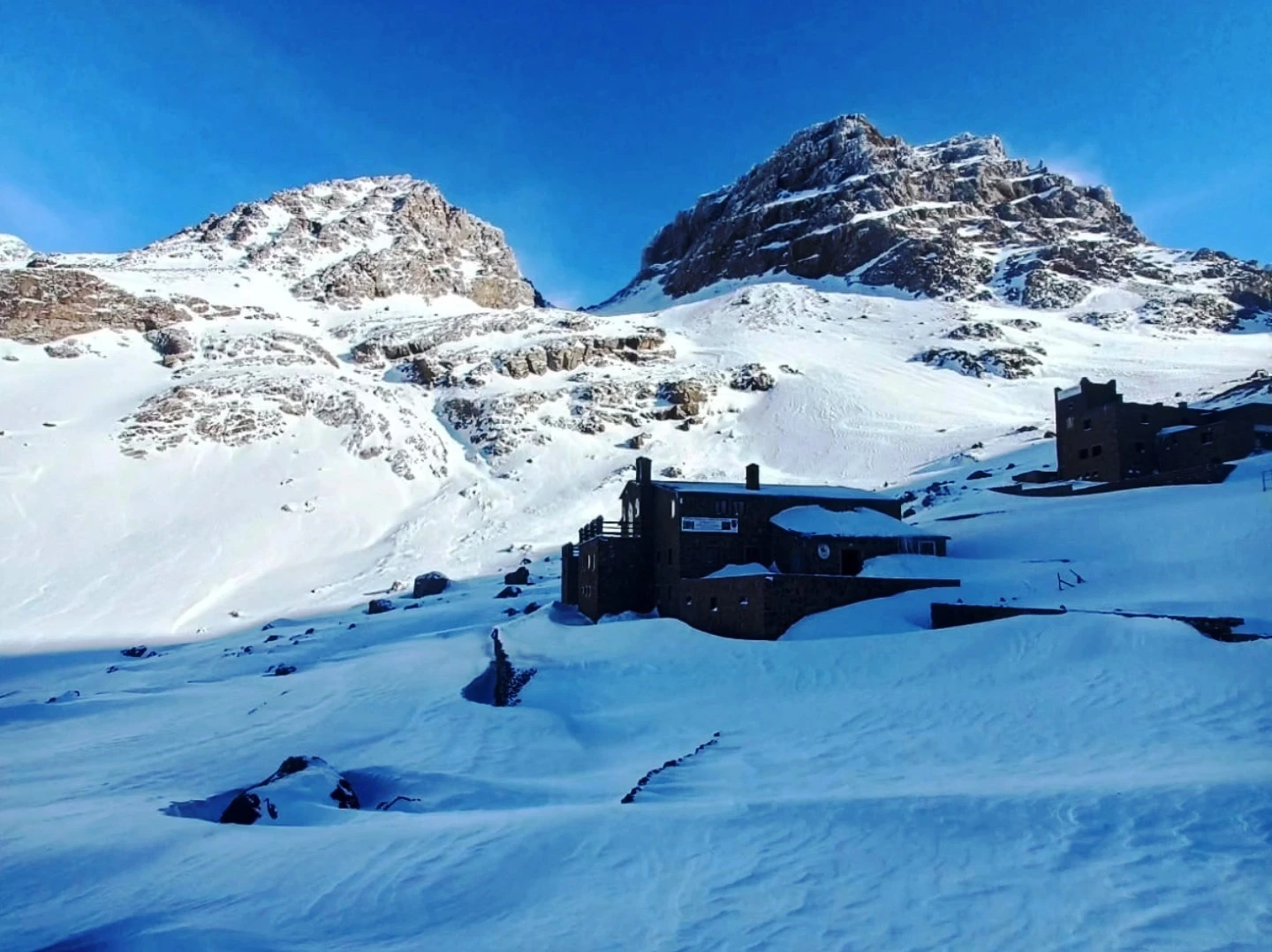
Mount Toubkal stands at 4,167 meters as North Africa's highest peak, but what the numbers don't tell you is how this mountain demands respect. Our group of friends from Agadir, Marrakech, and beyond learned this lesson the hard way during our winter ascent.
Planning Our Mount Toubkal Trek from Marrakech
We gathered in Marrakech with that mix of excitement and nervous energy you get before any big adventure. Our group was diverse—some experienced hikers, others (like a few of us) attempting something like this for the first time at 25 or 27 years old.
The preparation seemed straightforward enough. We loaded up on supplies: water, dates, and gear for the extreme cold. One thing our guide emphasized stuck with me: "The most important thing isn't reaching the summit—it's everyone returning safely to their families." At the time, I thought he was being overly cautious. I was wrong.
The Journey Begins: Imlil to Toubkal Refuge
The shared taxi from Marrakech to Imlil is the budget-friendly option most trekkers choose. You'll save money compared to a private car, and honestly, it's a chance to meet other adventurers. Just remember—these taxis only leave when full, so patience is essential.
The landscape changed as we climbed. Morocco's Atlas Mountains have this way of making you feel simultaneously small and exhilarated. Mules carried supplies up trails we'd soon be walking, their sure-footedness on icy paths making our upcoming challenge very real.
Watching those animals work reminded me why they're so crucial to mountain operations here. A mule can carry 150 kilograms through conditions that would stop most vehicles. The muleteers who guide them know these mountains like I know the streets of my neighborhood.
Night at the Refuge: 3,200 Meters and Dropping Temperatures
The refuge at 3,200 meters becomes your base before the summit push. Let me be honest about the conditions: it's cold. Really cold. The kind of cold where you're wearing every layer you brought and still shivering.
Our group huddled together, some unable to sleep from the altitude, others from anxiety about the 3 AM wake-up call. I kept getting up, my legs cramping from the altitude and cold. Someone joked about the "luxury" bathroom facilities—basically, you're doing everything in front of nature at temperatures that make you question your life choices.
But there's something special about that night too. The camaraderie when you're all equally uncomfortable creates bonds. We shared stories, encouraged each other, and tried not to think too hard about what tomorrow would bring.
Summit Day: 3 AM Start and Reality Hits Hard
Three in the morning at this altitude feels otherworldly. Headlamps created small circles of light as our group assembled. The plan was simple: stay together, move steadily, reach the summit.
The reality? Nothing about this climb was simple.
The path became steeper almost immediately. Ice made every step calculated. My friend fell at one point, his crampons tangled in his pants—a problem several of us faced. You'd think professional equipment wouldn't betray you like that, but when you're exhausted and cold, everything becomes a challenge.
People handle altitude differently. Some in our group moved steadily upward. Others, including myself at times, needed frequent breaks. The wind picked up. The cold intensified. Someone mentioned a snow storm might be coming.
I remember looking up at the summit, still invisible in the darkness, and thinking: "This is way harder than I expected."
The Mental Game: When Your Body Wants to Quit
Here's what no one really tells you about climbing Mount Toubkal in winter: the physical challenge is only half the battle. The mental aspect nearly broke some of us.
Around 3,200 meters, I seriously questioned whether I could continue. My friend was behind me somewhere in the darkness. The cold penetrated every layer. Each breath felt harder than the last.
But then you'd hear someone call out encouragement. Or you'd look back and see headlamps still climbing below you. Or you'd remember why you started this crazy adventure in the first place.
One of our group members who didn't make the final summit push because of altitude sickness showed incredible wisdom. Knowing your limits isn't failure—it's intelligence. The mountain will always be there.
Reaching the Summit: 4,167 Meters of Morocco
When we finally reached the top at 4,167 meters, the emotion was overwhelming. Some of us cried. Others just stood there, absorbing what we'd accomplished.
The summit of Mount Toubkal offers views that cameras can't quite capture. You're standing on top of North Africa, looking out over the Atlas Mountains stretching in every direction. Morocco spreads below you in a way that changes how you see this country.
We didn't stay long—the cold and wind wouldn't allow it. But those moments at the top, with friends who'd suffered through the same challenges, created memories that'll last forever.
The Descent: Sometimes Harder Than Going Up
If you think reaching the summit means the hard part is over, think again. Descending Mount Toubkal tested us in different ways.
The path that seemed manageable in darkness now revealed steep drops and icy sections that made my heart race. Tired legs became unreliable. Several people slipped (thankfully without serious injury). The journey that took hours in darkness seemed to stretch endlessly in daylight.
My legs were shaking by the time we reached the refuge. And we still had the hike down to Imlil ahead of us.
Practical Tips for Your Mount Toubkal Trek
Based on our experience, here's what you need to know:
Timing matters enormously. We climbed in winter, which added significant difficulty with snow, ice, and extreme cold. Summer treks are more accessible but bring their own challenges with heat and crowds.
Physical preparation is non-negotiable. If you're not regularly hiking or exercising, start training months before. Your lungs and legs will thank you.
Hire a proper guide. Yes, it's technically possible to do this independently, but our guide's knowledge of weather, routes, and altitude sickness potentially saved lives.
The right gear makes or breaks the experience. Crampons, proper winter clothing, good boots—don't skimp on equipment. We learned this the hard way when crampons started causing problems.
Altitude affects everyone differently. Some of us handled 4,167 meters fine. Others struggled significantly. This isn't about fitness—it's about how your body adapts to thin air.
What This Mountain Taught Me About Morocco
Climbing Mount Toubkal changed how I see Morocco. This country isn't just the medinas of Marrakech or the beaches of Agadir. It's also these magnificent mountains that have challenged travelers for generations.
The Berber guides who lead treks know these mountains intimately. Their families have lived in these valleys for centuries. When they offer advice, listen.
I also gained deep respect for the physical demands of this landscape. Morocco's diversity—from deserts to mountains to coasts—creates adventures that test you in different ways.
Would I Recommend Climbing Mount Toubkal?
Absolutely. But with a huge caveat: respect this mountain.
Don't treat it as a casual weekend hike. Don't underestimate the altitude, weather, or physical demands. Do prepare properly, hire experienced guides, and be ready for the challenge of your life.
The sense of accomplishment when you stand on North Africa's highest peak is indescribable. Our group started as friends looking for adventure. We came down as people who'd been humbled and transformed by Morocco's mountains.
Have you climbed Mount Toubkal, or are you planning a trek? I'd love to hear about your experience or answer questions about ours. What aspect of the climb concerns you most? Drop a comment below—and if you found this helpful, share it with fellow adventurers planning their Moroccan mountain challenge!