
How a French Painter and a Fashion Icon Saved Marrakech’s Most Magical Garden
If you’ve ever wandered through the bustling streets of Marrakech and suddenly found yourself standing before walls painted in the most electric shade of blue you’ve ever seen, chances are you stumbled upon Jardin Majorelle — and I can almost guarantee your jaw dropped.
Mine certainly did the first time I visited.
Spanning across a beautifully walled compound near Avenue Yacoub El Mansour in the northeast of Bab Doukkala, Jardin Majorelle is one of those places that feels like stepping into another world entirely. It’s a maze of intersecting pathways on different levels, bold-colored buildings, striking art installations, and one of the most extraordinary collections of rare plants you’ll find anywhere on the planet.
But what makes this garden truly special isn’t just its beauty — it’s the incredible story behind it. A story of passion, heartbreak, near-destruction, and an unexpected rescue by one of the world’s most famous fashion designers.
Let me take you through it.
A French Painter Falls in Love with Morocco
The story begins with Jacques Majorelle, son of the celebrated French furniture designer Louis Majorelle. Jacques was a man of many talents, but painting was his greatest love. He arrived in Morocco in 1917, first settling in Casablanca before making his way to Marrakech — the Red City — where he was absolutely captivated by the light, the colors, and the energy of the place.
I think anyone who has spent time in Marrakech understands that feeling. There’s something about this city that gets under your skin and never leaves.
In 1923, Jacques purchased a plot of land near the palm grove and began what would become his life’s work. He built a home in traditional Moroccan style, along with a Berber-inspired structure featuring a tall brick tower. Later, he commissioned architect Paul Sinoir to design a villa nearby — its ground floor served as his workshop, while the upper floor became his painting studio.
But Jacques wasn’t content with just a beautiful home. He had bigger plans.
40 Years of Building a Botanical Paradise
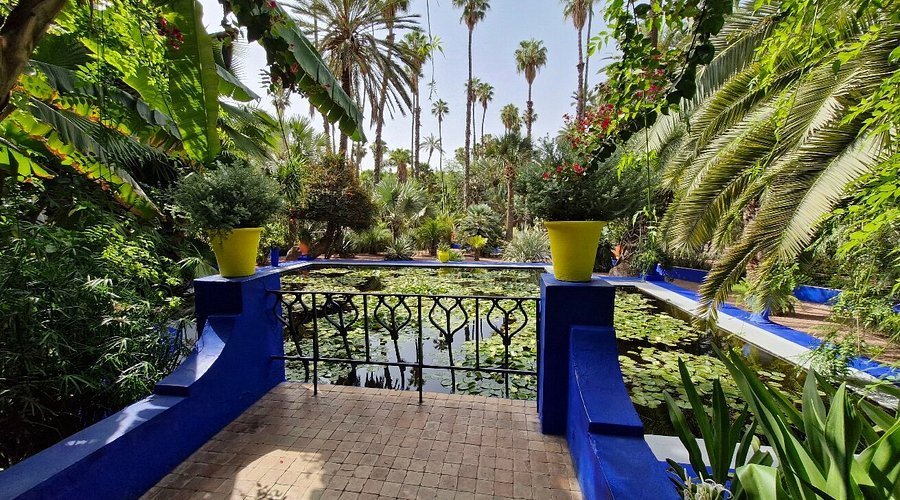
Over the course of four decades, Jacques Majorelle poured his heart into transforming his property into something extraordinary. He collected rare and exotic plants from five continents — more than 135 species in total — carefully cultivating them in Marrakech’s warm climate.
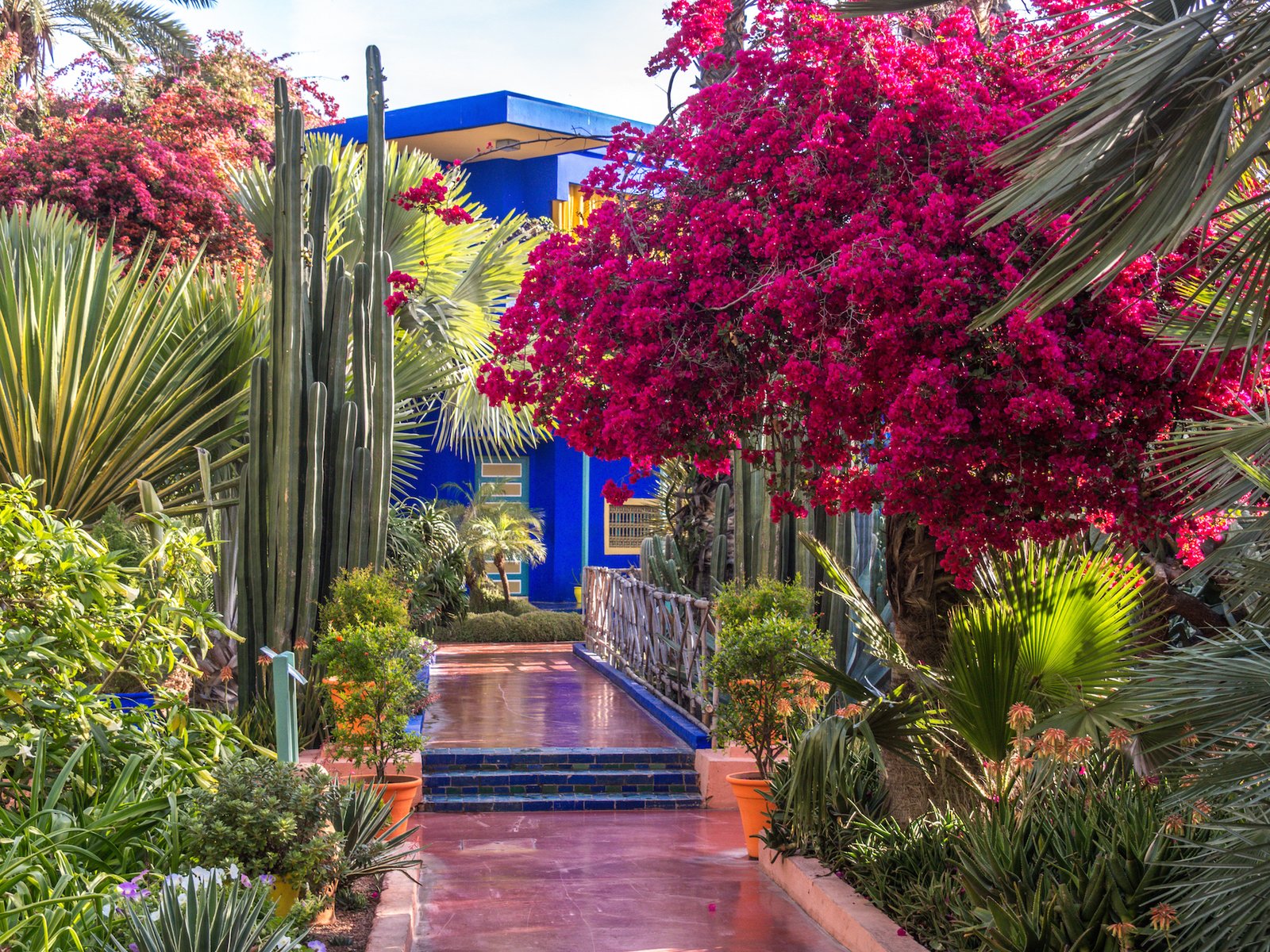
The garden became home to varieties of cacti, yucca, jasmine, and palm trees, along with coconut trees, banana plants, bamboo, white water lilies, and countless other species, many of which are now considered rare. It was essentially a living botanical laboratory, and Jacques treated it with the devotion of a scientist and the eye of an artist.
And then came the color.
That Famous Blue
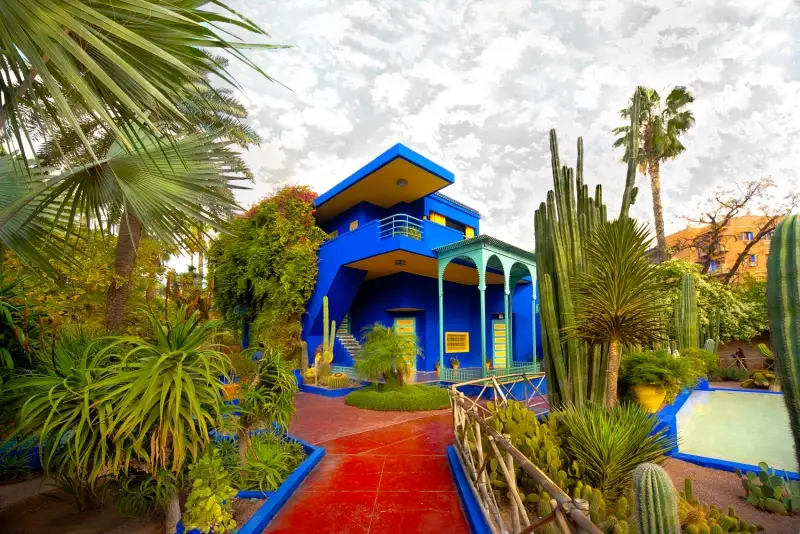
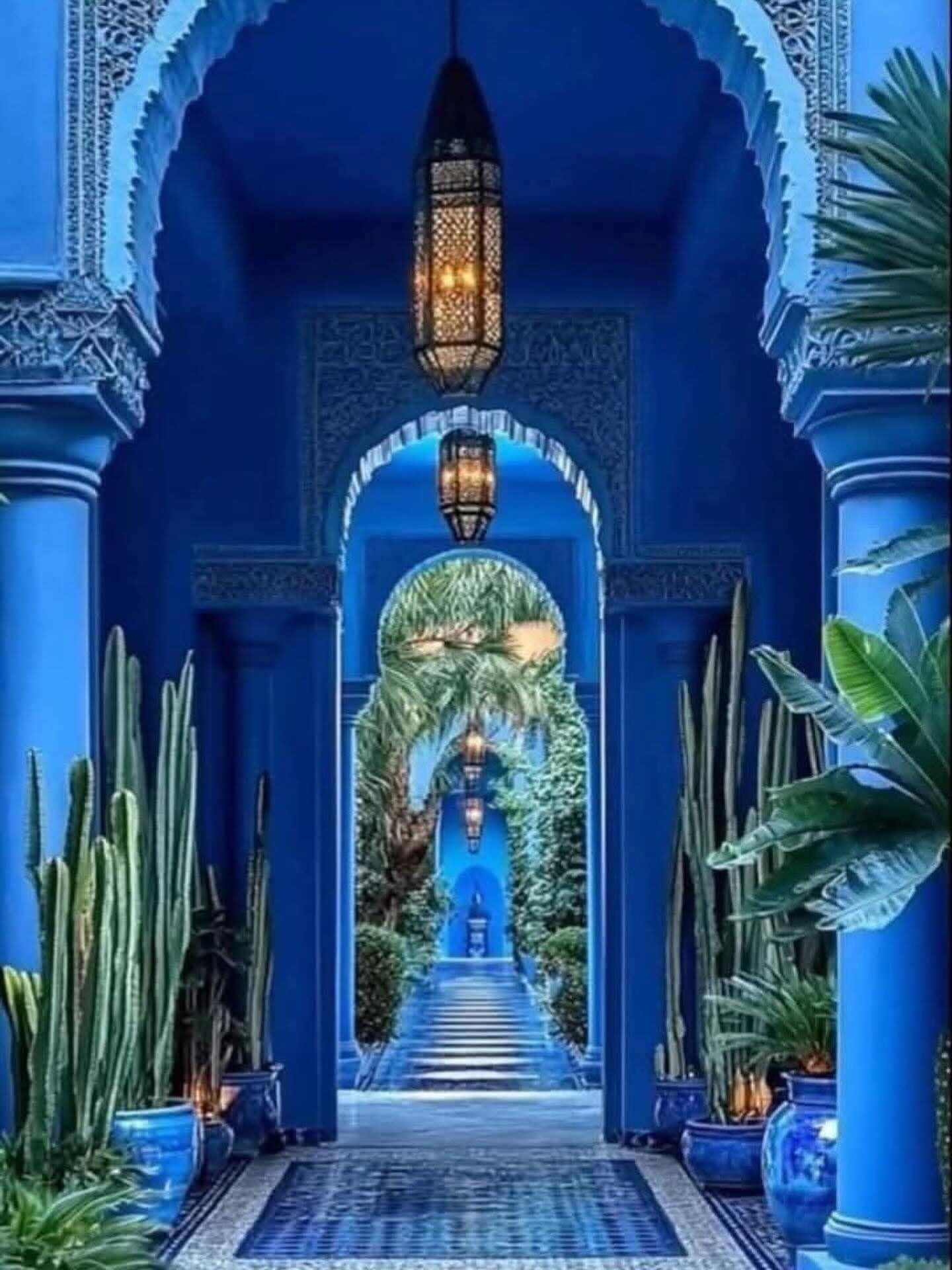
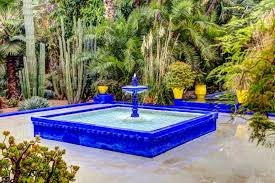
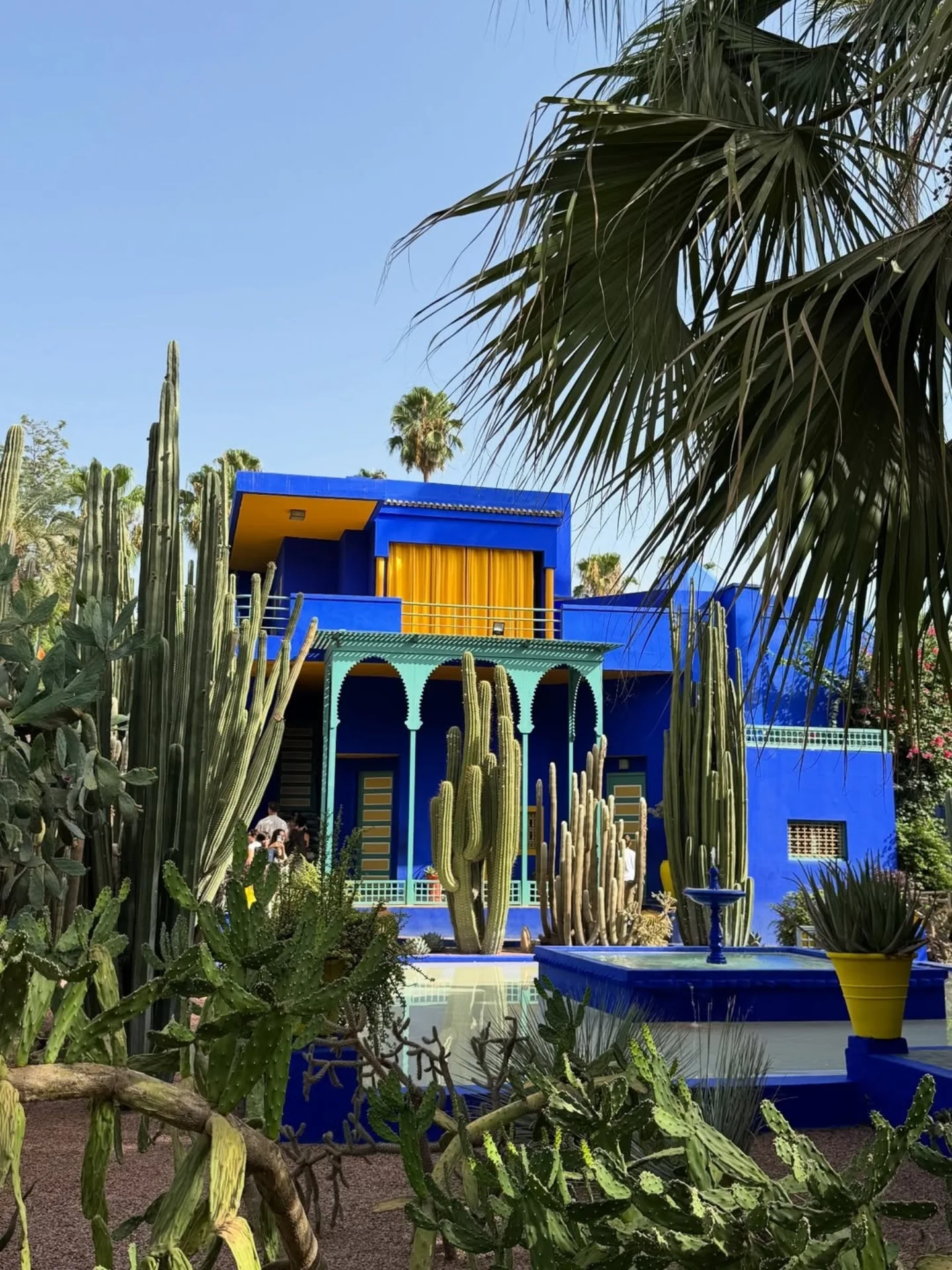
When people think of Jardin Majorelle, the first thing that comes to mind is always that blue. Jacques Majorelle painted the buildings throughout the garden in a striking, bold cobalt blue that has since become known worldwide as Majorelle Blue (bleu Majorelle in French).
It’s the kind of blue that photographs beautifully but somehow looks even more stunning in person — vibrant against the green of the plants, the terracotta pots, and the bright Marrakech sunshine. If you’ve seen it on Instagram, trust me, it’s even better in real life.
Jacques himself once said about his beloved garden:
“This garden is of enormous importance to me. I give myself to it entirely. I accept that I will spend my last years here, collapsing exhausted beneath its branches, after having given it all my love.”
Those words give you goosebumps, don’t they?
When Everything Fell Apart
In 1947, facing mounting maintenance costs, Jacques opened the garden to the public. For a while, things seemed to be looking up financially — but life had other plans. A painful divorce led to the division of his property, and then a devastating car accident resulted in the amputation of his left leg.
The medical bills drained what remained of his finances, and Jacques was forced to sell his share of the villa and gardens. He traveled to Paris for treatment, where he passed away on October 14, 1962, from complications related to his injuries.
It’s a heartbreaking end for a man who gave everything to create something so beautiful.
Four Years of Neglect
After Jacques Majorelle’s death, the garden fell into neglect for four long years. Local developers had plans to demolish the property and replace it with something new. Imagine — this incredible living artwork, nearly lost forever.
But fate had a different plan.
Yves Saint Laurent to the Rescue
Here’s where the story takes its most dramatic turn.
French fashion legend Yves Saint Laurent and his partner Pierre Bergé had first discovered Jardin Majorelle back in 1966 and had fallen completely in love with it. So when they learned in 1980 that the garden was at risk of being razed and turned into a tourist resort, they didn’t hesitate — they bought the property immediately and set about restoring it.
Yves Saint Laurent personally oversaw the restoration project. He expanded the garden, installed automatic irrigation systems, assembled a team of 20 dedicated gardeners, and increased the number of plant species from 135 to an impressive 300 varieties — all while carefully preserving Jacques Majorelle’s original vision.
It’s a beautiful example of one artist honoring the legacy of another.
A Final Resting Place
Yves Saint Laurent passed away in 2008, and in a deeply touching tribute, his ashes were scattered in the rose garden within Jardin Majorelle. Two years later, the street in front of the garden was renamed Rue Yves Saint Laurent in his honor.
In 2010, ownership of the property was transferred to the Pierre Bergé – Yves Saint Laurent Foundation, a French nonprofit organization that continues to maintain and protect the garden to this day.
And in 2011, the Berber Museum opened on the garden grounds, offering visitors a fascinating look into the creativity and heritage of the Berber people — the oldest inhabitants of North Africa.
Practical Information for Your Visit
Location: Near Avenue Yacoub El Mansour, northeast of Bab Doukkala, Marrakech
Opening Hours:
- October 1 – April 30: 8:00 AM to 5:30 PM daily
- May 1 – September 30: 8:00 AM to 6:00 PM daily
Entrance Fee: 30 MAD (approximately $4 USD)
How Long to Spend: Plan for about 3 hours to truly soak it all in. Don’t rush — this is a place meant to be savored.
My Tips
- Arrive early in the morning to avoid the crowds and enjoy the garden in softer light — it’s magical.
- Wear comfortable shoes; you’ll be walking on different levels and pathways.
- Don’t skip the Berber Museum while you’re there.
- Bring your camera, obviously — but also take a few moments to just sit on one of the benches, close your eyes, and listen to the birdsong and the rustle of bamboo. It’s incredibly peaceful.
Why Jardin Majorelle Matters
Jardin Majorelle isn’t just a garden. It’s a testament to what happens when passion meets dedication — and when people care enough to protect something beautiful. From Jacques Majorelle’s 40 years of devoted cultivation, to Yves Saint Laurent’s determination to save it from destruction, this place carries the love of two remarkable men who both fell under Morocco’s spell.
And honestly? Every time I visit, I fall under its spell too.
Have you been to Jardin Majorelle? I’d love to hear about your experience in the comments below!