
As I stood in the heart of Jemaa el-Fna square at 11 AM, the vibrant energy of Marrakech's most famous gathering place was already buzzing around me. Snake charmers coaxed cobras into dance, fruit juice vendors called out their offerings, and the constant movement of people created a colorful tapestry of life. Even though it wasn't evening yet, the square was already coming alive - a perfect introduction to the beautiful chaos that is Marrakech.
I recently spent 3 unforgettable days exploring Marrakech, and I'm excited to share my experiences, tips, and recommendations for making the most of your time in Morocco's stunning Red City. Whether you're planning a short visit or using Marrakech as a starting point for a longer Moroccan adventure, this guide will help you navigate this bewildering and beautiful destination.
Why Marrakech Is Called the Red City

Morocco
Marrakech gets its nickname "The Red City" for a very practical reason - the distinctive red-clay buildings that give the entire city a warm, terracotta glow. As I discovered, this isn't just a random choice - the buildings throughout both the Medina (old city) and Gueliz (new city) districts are constructed using a special local clay that creates this uniform reddish-orange color. This distinctive architectural style is protected and maintained, giving Marrakech its iconic appearance that you'll notice immediately upon arrival.
Understanding Marrakech's Layout
Before diving into my itinerary, it's helpful to understand how Marrakech is organized. The city is divided into two main areas:
- The Medina - The historic walled old city with narrow winding streets, traditional riads, souks (markets), and most major historic sites. This is where I stayed and spent most of my time.
- Gueliz - The newer, more modern district with wider streets, contemporary buildings, shopping malls, and international restaurants.
The Medina is surrounded by tall defensive walls with 19 impressive gates. When you arrive from the airport, you'll pass by these distinctive walls before entering the labyrinth of streets inside. Most travelers choose to spend the majority of their time exploring the Medina, venturing to Gueliz only for specific attractions like the Majorelle Gardens.
Where to Stay: Traditional Riads

For accommodations in Marrakech, you have two main options: modern hotels (often in the Gueliz area) or traditional riads within the Medina. I chose to stay in riads to get a more authentic experience.
Riads are traditional Moroccan houses built around a central courtyard or garden, often with a small pool or fountain. The word "riad" actually means "garden" in Arabic. These were historically homes for wealthy families but have now been converted into charming boutique hotels, usually with fewer than 10 rooms.
During my stay, I experienced two different riads:
- Riad Medina Art and Suite - Priced at around 100 euros per night including breakfast, this riad had a small pool and traditional Moroccan decor. The rooms were a bit small, and I noticed some cleanliness issues with the pillows (I recommend bringing your own pillowcase if you're particular about hygiene).
- Riad Nayla - At approximately 150 euros per night with breakfast included, this was my second accommodation. The staff were exceptionally hospitable, and I particularly enjoyed the traditional mint tea service upon arrival - poured from an impressive height, which I learned is a sign of respect and also helps cool the tea and create a pleasing foam.
Both riads offered lovely courtyard breakfast settings and were located in the heart of the Medina, making them perfect bases for exploration.
Day 1: Jemaa el-Fna Square and the Heart of the Medina
Jemaa el-Fna Square - The Beating Heart of Marrakech
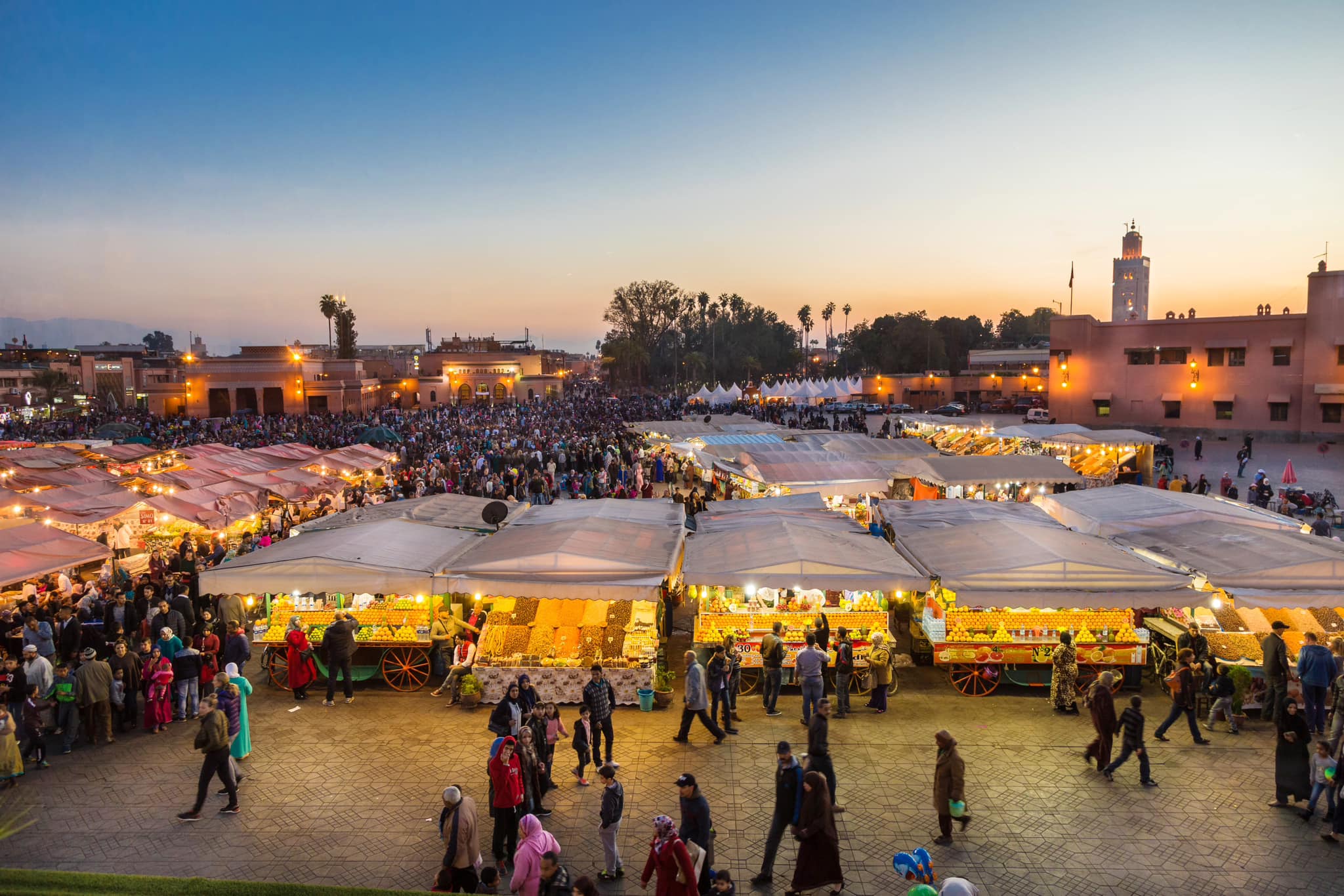
My Marrakech adventure began at Jemaa el-Fna, the city's main square and a UNESCO protected site since 2011. This square truly is the heart and soul of Marrakech, constantly buzzing with activity from morning until late night (though it becomes even more lively after dark).
What can you expect to find here? Everything! Snake charmers performing cobra dances, monkey handlers offering photo opportunities, fresh juice sellers, food vendors, dancers, and sunglasses merchants all create an incredible mix of sights, sounds, and smells.
The name "Jemaa el-Fna" has a rather dark history - it translates roughly to "Assembly of the Dead" because executions and punishments were once carried out here. Thieves would have their hands cut off in this very square. Today, it serves a much happier purpose as the central gathering place for both locals and tourists.
Visitor tip: Be cautious in the square as it gets very crowded. Watch your belongings and be wary of snake charmers and monkey handlers who may try to place animals on you for photos and then demand high fees. Similarly, the henna ladies might offer to do a "free" or "5 dirham" henna tattoo, only to demand 100 dirhams after completion. Bargaining is expected, but it's best to establish prices clearly before engaging with vendors.
Koutoubia Mosque
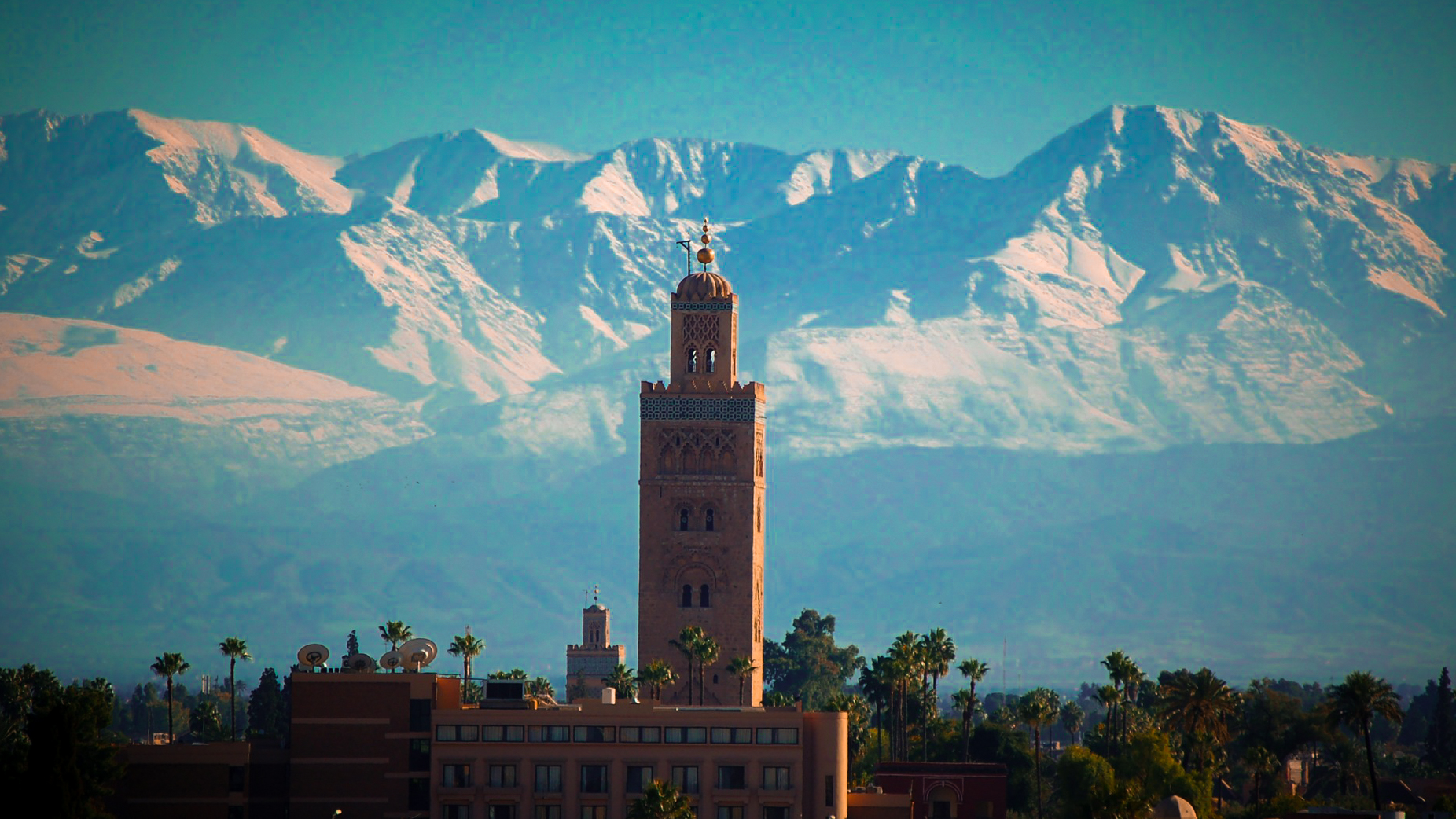
Just a short walk from Jemaa el-Fna stands the impressive Koutoubia Mosque with its 77-meter minaret, the tallest structure in the Medina. Unlike the round minarets I was used to seeing, this one has a distinctive rectangular shape that I learned has influenced other structures, including the Giralda tower in Seville, Spain.
The mosque's name comes from the Arabic word for "books" (kutub), as the area was once home to many manuscript and book sellers. The design incorporates the golden ratio, making it an architectural masterpiece.
An interesting detail I noticed were some ruins next to the current mosque. Our guide explained that these were from the original mosque construction, which was abandoned when builders realized the orientation was off by 5 degrees from the proper direction of Mecca. Rather than continue with the misaligned structure, they started fresh with the current mosque.
Unfortunately, the 2023 earthquake caused significant damage to the Koutoubia Mosque, and restoration work was still ongoing during my visit. Non-Muslims can't enter the mosque except during prayer times, but you can admire it from the outside and enjoy the beautiful garden in front.
Day 2: Bahia Palace and the Souks
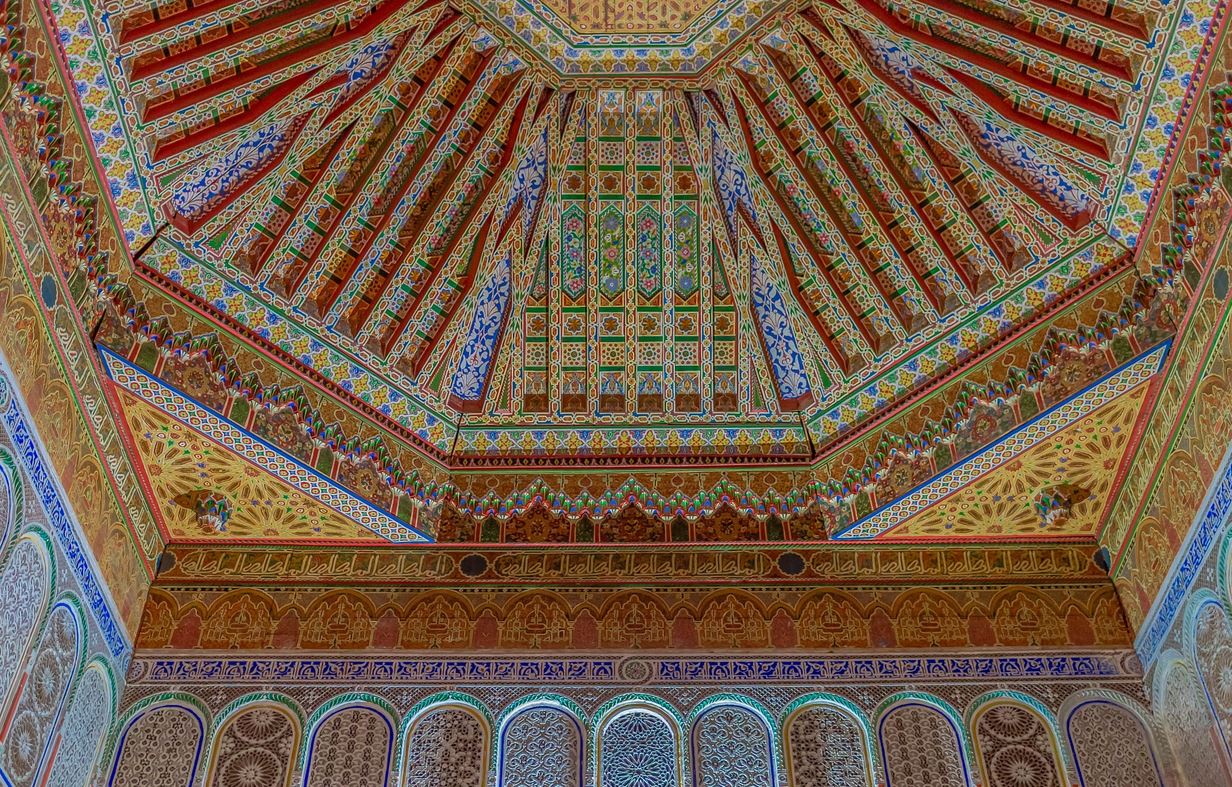
Bahia Palace - A Glimpse of Royal Life
On my second day, I visited the magnificent Bahia Palace, built in the 19th century. Though not extremely old by Moroccan standards, this palace offers an impressive glimpse into royal life with its 160 rooms showcasing exquisite craftsmanship.
The name "Bahia" means "brilliance" in Arabic, and the palace certainly lives up to this description. I learned it was named after the favorite wife of the ruler who built it - the one who gave him his first son.
The most impressive feature is the Grand Courtyard, which was used for state affairs and later as a madrasa (religious school). Throughout the palace, I admired the incredible woodwork on the ceilings - a testament to Marrakech's once-famous woodworking artisans. The floors showcase beautiful mosaic work and ceramic art, with typical courtyard fountains that unfortunately weren't running during my visit due to ongoing earthquake restoration.
Visitor tip: The palace gets extremely crowded around noon. I arrived at 11 AM and found it relatively peaceful, but by noon it was so packed that people were moving through the rooms at a shuffle. Entrance costs 100 dirhams (as of April 2023), and there aren't many informational signs inside, so consider reading about the history beforehand.
Exploring the Souks
After the palace, I spent time wandering through Marrakech's famous souks - the bustling marketplaces that wind through the Medina like a labyrinth. These narrow streets (called "souks" themselves) are lined with countless small shops selling everything from spices and textiles to leather goods and metalwork.
Walking through these streets requires constant vigilance as motorcycles, bicycles, donkeys, cars, and pedestrians all share the same space. It's chaotic but exhilarating! Each section of the souk traditionally specializes in different goods, though nowadays you'll find a mix of everything.
The most famous is Souk Semmarine, which is partially covered and contains a wide variety of shops. I sampled some delicious traditional Moroccan cookies here, including almond ones called "Moroccan gazelle."
Day 3: Ben Youssef Madrasa and Majorelle Gardens

Ben Youssef Madrasa - An Architectural Marvel
My third day began at the Ben Youssef Madrasa, one of the most significant examples of Fassi architecture (from Fez) in Marrakech. Built in the 16th century, this Islamic college once housed 900 students and played an important role in spreading Islamic education.
What struck me most were the colorful mosaic walls and floors, known as "zellij" in Fassi architecture. The intricate woodwork on the walls was equally impressive. The madrasa contains 160 small student rooms surrounding a large central courtyard, all of which you can explore at your own pace.
Entrance costs 50 dirhams, and like many sites in Marrakech, it gets very crowded by midday. I'd recommend arriving around 10 AM for a more peaceful experience.
Majorelle Gardens - A Blue Oasis

In the afternoon, I took a taxi to Gueliz to visit the famous Majorelle Gardens, one of Marrakech's most iconic attractions. Created in the 1930s by French Orientalist artist Jacques Majorel, this garden offers a peaceful respite from the busy Medina.
Jacques Majorel was born in France but moved to Marrakech for health reasons, needing a humid climate. After exploring the Mediterranean and North Africa, he fell in love with Marrakech and settled there. He built a house and garden, opening it to the public in 1947 to help cover maintenance costs.
Unfortunately, Majorel had to leave Marrakech after divorcing in the 1950s. The garden was later acquired by fashion designer Yves Saint Laurent and Pierre Bergé, who loved it so much that Saint Laurent requested his ashes be scattered there after his death - which indeed happened.
The most distinctive feature is the vibrant "Majorelle Blue" color that appears throughout the garden - on walls, planters, and decorative elements. This specific shade of cobalt blue was patented by Jacques Majorel and has become synonymous with the garden. Even the staff wear this distinctive blue!
Today, the garden features a stunning collection of exotic plants, especially cacti, and houses a Berber Museum in the striking blue building that was once Majorel's home. Next door is the Yves Saint Laurent Museum, showcasing the designer's work and connection to Morocco.
Ticket information: There are three ticket options:
- Garden only: 210 dirhams
- Combined ticket (Garden, Berber Museum, and YSL Museum): 330 dirhams
- Individual museum tickets Students receive a 50% discount on all options.
Both museums prohibit photography inside, though I managed to capture a few discreet shots. The Berber Museum is quite small and displays traditional clothing and artifacts from Berber culture. The YSL Museum features the designer's fashion creations and a 10-minute biographical film.
Visitor tip: The garden café closes at 6 PM and often has long lines, so plan accordingly if you want to enjoy refreshments in this beautiful setting.
Moroccan Cuisine: What to Eat
No visit to Marrakech would be complete without sampling the delicious local cuisine. During my stay, I tried several traditional dishes:
Tagine

This slow-cooked stew is named after the distinctive conical clay pot it's cooked in. I enjoyed various versions with chicken, beef, and fish. The tradition of tagines comes from a practical solution - historically, many homes in the Medina didn't have kitchens, so women would prepare these dishes and send their husbands to take them to community ovens for cooking.
Fresh Fruit Juices
Around Jemaa el-Fna, you'll find numerous stalls selling freshly squeezed juices. Small cups cost about 10 dirhams, while larger ones are 20 dirhams. I tried different combinations, including papaya and banana - all delicious and refreshing after walking in the heat.
Mint Tea
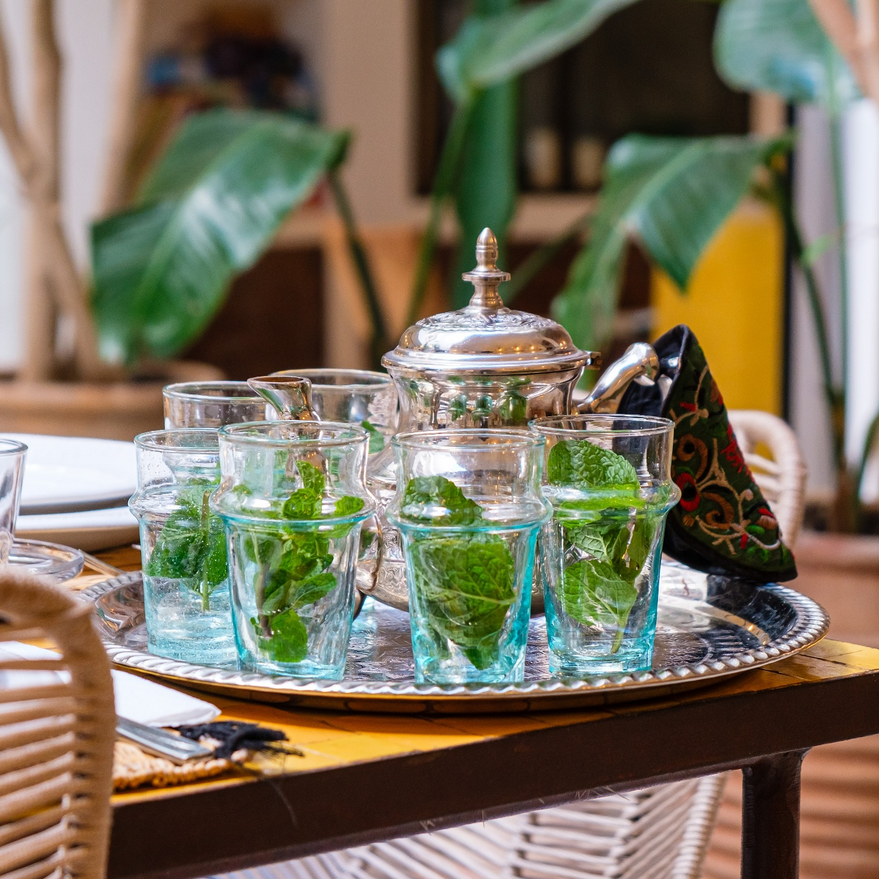
Served everywhere in Morocco, this sweet tea with fresh mint leaves is poured from a height - a tradition that supposedly shows respect for the guest and helps cool the tea while creating a nice foam. It's both refreshing and a wonderful cultural experience.
Restaurants I Tried:
- Nomad - A somewhat touristy but clean restaurant away from the main bustle. Main courses cost around 200 dirhams, slightly pricier than average but with good quality food and a pleasant atmosphere with music.
- Comptoir Darna - One of Marrakech's famous venues, offering live music and belly dancing shows at 9:30 PM and 11 PM. Food is more expensive (around 250-300 dirhams per main course), but the entertainment is worth it. They serve alcohol (unlike many Marrakech restaurants), and the upper floor transforms into a club with a DJ after 10:30 PM. Reservations are essential and should be made a week in advance.
- Majorelle Rooftop - Located near the Majorelle Gardens, this restaurant offers traditional tagine dishes in a beautiful rooftop setting. It's somewhat touristy with higher prices than local establishments.
Practical Information
Transportation
Getting around Marrakech can be challenging. Here are your main options:
- Taxis - There's no reliable meter system, so agree on a price before getting in. You'll need to bargain.
- InDrive app - This was my discovery for Marrakech. It's a ride-hailing app that works on a bidding system - you offer a price, drivers accept or counter-offer. Sometimes private cars rather than official taxis show up, but we had no issues with this system.
- Airport transfers - We booked through Booking.com for about 12 euros from the Medina to the airport, which was reliable and convenient.
Inside the Medina, walking is your main option, though navigating the maze-like streets can be confusing and exhausting due to the constant need to dodge motorcycles, donkeys, and crowds.
Money and Shopping
Bargaining is expected for almost everything in Marrakech, from souvenirs to taxi rides. This can be exhausting but is part of the local culture. For groceries and necessities, you'll find Carrefour supermarkets and even BIM stores (a Turkish chain) that operate with fixed prices.
Safety
I had some safety concerns before visiting, but experienced no negative incidents. Vendors and taxi drivers can be pushy, but simply moving along without engaging usually resolves any uncomfortable situations. The main annoyance was the constant chaos and need to negotiate for everything.
Would I Return to Marrakech?
After three full days, I felt I had seen most of what Marrakech has to offer. The constant haggling and chaotic streets were a bit exhausting, though the cultural and historical experiences were definitely worthwhile. Three days felt perfect for exploring the main attractions while also sampling local cuisine and culture.
One important note: we had an issue with our luggage not arriving on our Turkish Airlines flight. No one notified us when it was delivered the next day - we had to check ourselves. If you experience similar problems, be proactive about following up.