Morocco: Kingdom Between Sea and Desert - A Personal Journey

A land where ancient traditions and modern aspirations dance together under the watchful eye of the Atlas Mountains
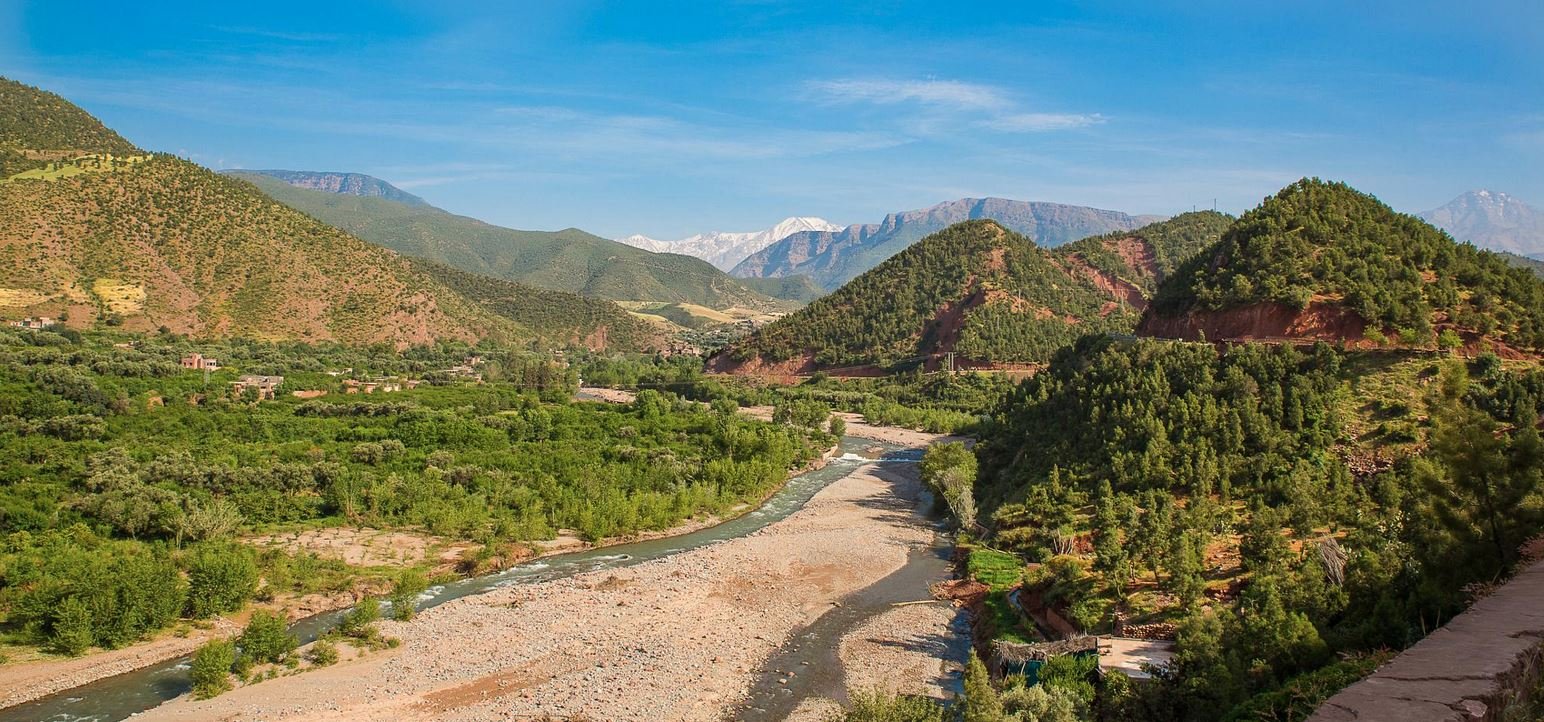
I remember my first glimpse of Morocco’s diverse landscape - the contrast between the rugged mountains and the endless Sahara took my breath away. This kingdom between the Mediterranean Sea and the vast desert is a place of stunning contrasts, where centuries-old traditions meet modern aspirations. From the bustling medinas of imperial cities to the peaceful silence of palm-filled oases, Morocco captured my heart from the moment I arrived.
The Imperial Cities: Where History Lives On
Rabat: The Relaxed Capital
Rabat, Morocco’s capital city on the Atlantic Ocean, presents a calmer atmosphere compared to other major cities. The current ruler, King Mohammed VI, resides here, governing with a progressive and reform-oriented approach - quite unlike the infamous Sultan Mulai Ismail who once ruled with an iron fist.
The city was founded by Phoenicians and Carthaginians as a trading post at the mouth of the Bou Regreg River. Later it was conquered by Romans, and in the 7th century, Berbers established their state here. The name “Rabat” comes from “Ribat,” a fortified monastery built by Arabs.
Don’t miss the impressive Hassan Tower, a landmark of the city. This massive structure stands next to the remains of the never-completed Hassan Mosque, whose grand scale is still evident today. Adjacent is the mausoleum of Mohammed V, grandfather of the current king, where royal guards in their striking red uniforms make for popular photo opportunities.
“The royal guards in their red fantasy uniforms, which could have come from a theater’s costume department, fight in vain against boredom,” I observed during my visit, watching as they occasionally sneaked a forbidden chewing gum to pass the time.
Marrakech: The Red City
No Moroccan journey would be complete without experiencing Marrakech, the “Red City.” The famous Jemaa el-Fna square, once a place where sultans displayed the heads of their enemies to command respect, now transforms into a lively food market by night with countless food stalls creating islands of light in the darkness.
The Koutoubia Mosque with its soaring minaret is the most beautiful building in the city. Rising nearly 70 meters high, the tower was completed in the 12th century and recently underwent extensive restoration.
A perfect retreat from the bustle of Marrakech can be found in the many riads - traditional houses converted into hotels. Behind high walls that protect from the outside noise, you’ll discover peaceful inner courtyards with fragrant orange trees, colorful orchids, and softly bubbling fountains - a small paradise straight out of One Thousand and One Nights.
“Who has once stayed in a riad will never want to know about modern hotels again,” I thought as I relaxed in the peaceful courtyard after a day navigating the busy souks.
Fez: The Spiritual Heart
Fez, the oldest of Morocco’s four imperial cities and the best-preserved medieval city in the Arab world, is the spiritual and religious center of the country. The most learned scholars, respected preachers, and skilled craftsmen all come from Fez.
The medina of Fez el-Bali is an incomprehensible maze of houses and winding alleys. It takes days for a visitor to develop even a basic sense of orientation. The Bab Boujloud, also called the “Blue Gate” because of its color, is the main entrance to the old town.
Without the ever-present donkeys, nothing would move in the narrow alleyways of the souks. They patiently transport weights up to 100 kg and were once the communication hub for news and gossip.
The Kairaouine Mosque, simultaneously a university, still enjoys a brilliant reputation in the Arab world today. However, like many religious sites in Morocco, non-Muslims must be content with a view through the gates.
Coastal Treasures and Mountain Retreats
Essaouira: Morocco’s Most Charming Seaside Town
For those seeking a truly Moroccan beach vacation, Essaouira is considered by connoisseurs to be Morocco’s most lovable seaside resort. The idyllic harbor with its eternally circling seagulls is not just picturesque - it’s a sign of abundant fish. The nutrient-rich cold currents off Essaouira’s coast support a tremendous wealth of fish, and the fishing rights remain in Moroccan hands.
In the 18th century, French architect Theodore Cornut built the massive fortress of Essaouira on behalf of Sultan Sidi Mohammed Ben Abdallah. The cannons menacingly pointed toward the sea were gifts from European merchants to the Sultan, as Essaouira (formerly Mogador) was the only port south of Tangier that was open to trade with Europe.
Walking through Essaouira’s streets, I was struck by the colorful, relaxed atmosphere. Unlike other Moroccan cities where persistent guides aggressively offer their services to visitors, here strangers are guests in a city that exudes the philosophy of “live and let live” more than other places in the country.
“It truly seems that nowhere else in Morocco are people as friendly and accommodating as in Essaouira,” I noted in my travel journal.
Chefchaouen: The Blue Pearl
Hidden between two mountain peaks of the Rif Mountains, Chefchaouen with its 36,000 inhabitants feels like a large village, but this first impression is deceiving. The city captivates visitors with its extraordinary light and play of colors created by whitewashed buildings with their strong tinge of blue.
Chefchaouen, “the blue city,” has become an absolute must for every Morocco traveler. Its residents have grown accustomed to strangers and adjusted to them, yet everything feels authentic, nothing staged for tourists. In the small side streets, life follows its usual course as it has for hundreds of years.
Until 1920, the city was considered holy for Muslims and forbidden to Christians. It was founded in the 15th century by Moulay Rachid, a direct descendant of the Prophet Mohammed.
The Atlas Mountains: Nature’s Grandeur
The Middle and High Atlas Mountains offer landscapes of harsh beauty. On the way to the south, the road winds like an endless ribbon through the barren rocks of the High Atlas - an inhospitable region where almost nothing grows and even the undemanding goats struggle to find food.
In this seemingly hostile environment, you’ll find breathtaking natural spectacles like the waterfalls of Ouzoud. Since thousands of years, nothing much has changed here. The water masses plunge more than 100 meters deep from the plateau, combining foaming in the depths before irrigating a lushly green valley.
“Water in Morocco means life and prosperity, and here it exists in abundance,” I thought, watching the powerful falls create rainbows in the mist.
Into the Desert: The Soul of Morocco
The Draa Valley: Life-Giving Waters
Like a green fertile tongue, the date palm valley with the Draa River extends from Ouarzazate to Zagora - a lifeline on which the existence of thousands of families depends. Some have given up long ago, as evidenced by abandoned kasbahs, former residential fortresses of Berber tribes built from clay and earth.
The millions of date palms are at risk from a beetle pest that threatens the palm population despite extensive research to find a remedy. What today means life and modest prosperity for the people in this region could turn into a catastrophe in the near future.
Dates are considered lucky charms in Morocco. Even the Prophet is said to have mainly subsisted on dates and camel milk. The local women are responsible for tending the fields, managing households, and raising children - just as they have been since ancient times.
Zagora and Beyond: Gateway to the Sahara
Zagora may appear bland and boring at first glance, but the town holds its secrets. Across the river lies the hamlet of Amezrou with its old, now almost deserted Jewish kasbah. It’s as if one can hear the rabbi’s lamenting songs and the prayer murmurs of the faithful - a mystical place.
The Jewish community once specialized in making silver jewelry, a craft continued by Muslim Berbers after the exodus. In a backyard of an abandoned mellah (Jewish quarter), craftsmen skillfully create jewelry with mysterious motifs, mixing copper and silver - genuine handwork, not assembly-line production for the tourist markets.
The pride of Zagora is its youth, considered particularly well-educated and intelligent. Yet a pressing problem becomes evident here: the lack of good jobs. Many young people leave for the big cities or Europe to financially support their families from there.
The Sahara: A Garden of Allah
Five hours by camel through the desert leads to camps where travelers can experience the genuine Sahara. As the sun sets, temperatures drop dramatically, and warmth comes only from the fire where nomads cook meals for guests and sing their ancient tribal songs.
The next morning, as the sun slowly rises on the horizon, warming frozen limbs and creating shadow plays on the massive dunes, the desert reveals itself as a masterpiece of sand - a very transient mountain landscape of majestic, sublime beauty.
“People have subdued the earth at God’s command, but they could not conquer Allah’s garden, the desert,” I reflected as our camels carried us across the endless dunes. “It was eternal and will be eternal, just like the hospitality of its inhabitants.”
Practical Tips for Your Moroccan Adventure
Where to Stay
- Riads : For an authentic experience, stay in a traditional riad. These converted houses with central courtyards offer peaceful retreats from busy city life.
- Desert Camps : For a taste of nomadic life, spend at least one night in a Sahara camp. The stargazing opportunities are unmatched!
- Coastal Retreats : In Essaouira, Hotel Lalla Mira offers comfortable rooms and an attached traditional hammam (Turkish bath).
Getting Around
- Shared Taxis : For travel between cities, grand taxis are often more convenient than buses.
- Local Guides : In medinas like Fez, considering hiring a local guide for at least a day to help you navigate the labyrinth of streets.
- Donkeys : In old medinas, these patient animals are still the main transportation method for goods through narrow streets.
Culinary Delights
- Tajine : Try this traditional slow-cooked stew, especially lamb with prunes and almonds or chicken with lemon and olives.
- Fresh Fish : In coastal towns like Essaouira and Agadir, enjoy freshly grilled seafood at the small food stalls near the harbor.
- Mint Tea : The national drink, offered everywhere as a sign of hospitality.
Frequently Asked Questions
What are the four imperial cities of Morocco?
The four imperial cities of Morocco are Rabat (the current capital), Marrakech, Fez, and Meknes. Each served as the country’s capital at different points in history and displays unique architectural and cultural heritage.
Is Morocco safe for tourists?
Morocco is generally considered safe for tourists. As in any destination, normal precautions should be taken, especially in crowded markets and medinas. The Moroccan people are known for their hospitality and friendliness toward visitors.
When is the best time to visit Morocco?
Spring (March to May) and fall (September to November) offer the most pleasant temperatures across the country. Summer can be extremely hot, especially in inland cities and the desert, while winter brings snow to the Atlas Mountains but mild temperatures to coastal regions.
Do I need to cover up when visiting Morocco?
While Morocco is a Muslim country, it’s used to tourists. However, respectful dress is appreciated, especially when visiting religious sites or rural areas. Women should cover shoulders and knees, and men should avoid very short shorts in conservative areas.
Can I drink the tap water in Morocco?
It’s generally recommended that tourists drink bottled water in Morocco. Bottled water is inexpensive and widely available throughout the country.
Have you ever visited Morocco? What was your favorite place or experience? I’d love to hear your stories in the comments below! And if you’re planning your first trip to this magical kingdom between the sea and desert, feel free to ask any questions – I’m always happy to help fellow travelers navigate this beautiful country.


