
A colorful adventure through the Red City, Atlas Mountains, and ancient medinas with six kids in tow
I remember standing in Jemaa el-Fna square in Marrakech, surrounded by the chaos of drums, pipes, and street performers, thinking this might be the most incredible place I've ever visited. Little did I know our Morocco family journey was just beginning, and even more wonders awaited us across this beautiful country.
Marrakech: Where Our Adventure Began
Marrakech, the Red City, is where Morocco gets its name—from the Berber words "mur" (land) and "akush" (likely meaning God), essentially "Land of God." Founded around the year 1000 during the Almoravid dynasty, Marrakech is one of Morocco's four imperial cities alongside Fes, Meknes, and Rabat.
Our first stop was the magnificent Bahia Palace, built in the 19th century by the Grand Vizier (Prime Minister) of that time. What makes this palace special is how it showcases the very best of Moroccan craftsmanship in one place. If you visit with children, point out the detailed tile work and intricate carvings—my kids were fascinated by the patterns and colors.
Not far away, we visited the Ben Youssef Madrasa, once home to 900 students. This ancient Islamic school displays even more stunning examples of traditional Moroccan artistry. The courtyard with its reflecting pool is especially beautiful—worth a family photo!
We also explored the Mellah, Marrakech's historic Jewish quarter. Our guide explained that a large Jewish community settled here after being expelled from Spain following the Reconquista, creating a rich cultural mix that still influences Moroccan crafts and cuisine.
The True Soul of the Souk
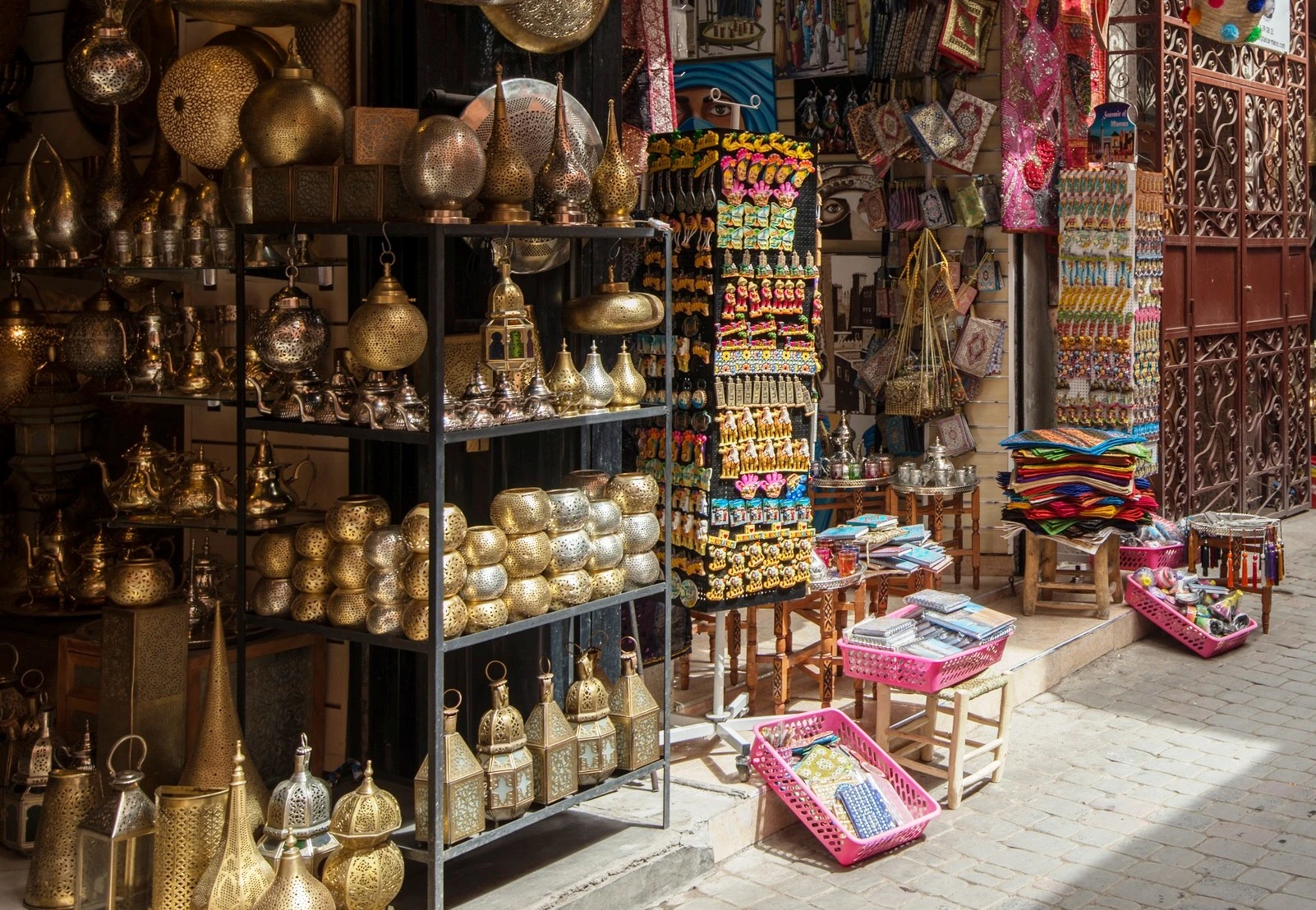
When most tourists talk about visiting the souks of Marrakech, they're usually thinking about the maze-like shopping areas selling tourist souvenirs. But our local guide Mohammed shared something interesting—for him, the real souk isn't just where things are sold, but where they're made.
"The true souk is where the workshop and shop are one—where artisans are focused on creating, not just catching customers."
Following Mohammed's advice, we sought out workshops where craftspeople were busy making goods rather than just selling them. This approach gave our children a much more authentic experience—watching real craftspeople at work instead of just browsing souvenirs.
For a hands-on activity, we joined a pottery painting workshop where the kids decorated small terracotta pots. My daughter later described it as "making beautiful pouches and pencil cases with Moroccan designs." These handmade souvenirs mean so much more than anything we could have bought.
The Heart of Marrakech: Jemaa el-Fna
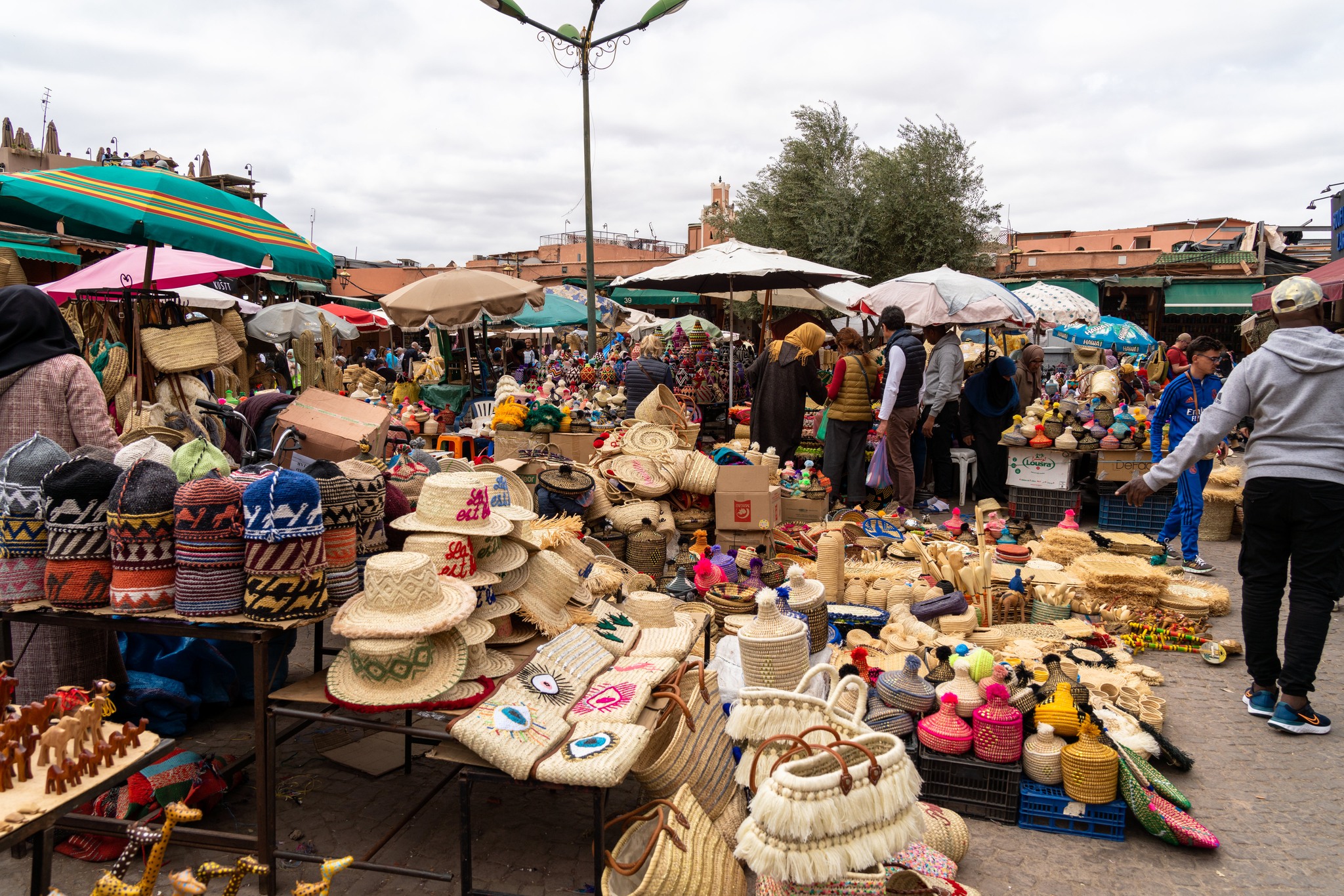
No visit to Marrakech is complete without experiencing Jemaa el-Fna square. This UNESCO World Heritage site truly comes alive in the evening, transforming into what I can only describe as a magnificent chaos of drums, pipes, snake charmers, storytellers, and food stalls.
"Jemaa el-Fna is one of the most incredible squares that exist in the world," I told my children as we approached. "A crazy mix of drums, pipes, and people doing all kinds of things. It's the beating heart of this country."
Every evening brings a different show, yet the energy remains the same. The girls insisted on getting henna tattoos—a tradition with roots stretching back to ancient Egypt. If your children want henna, be careful to find someone reputable who uses natural dyes, as chemical alternatives can cause allergic reactions or skin irritation.
Crossing the Atlas Mountains
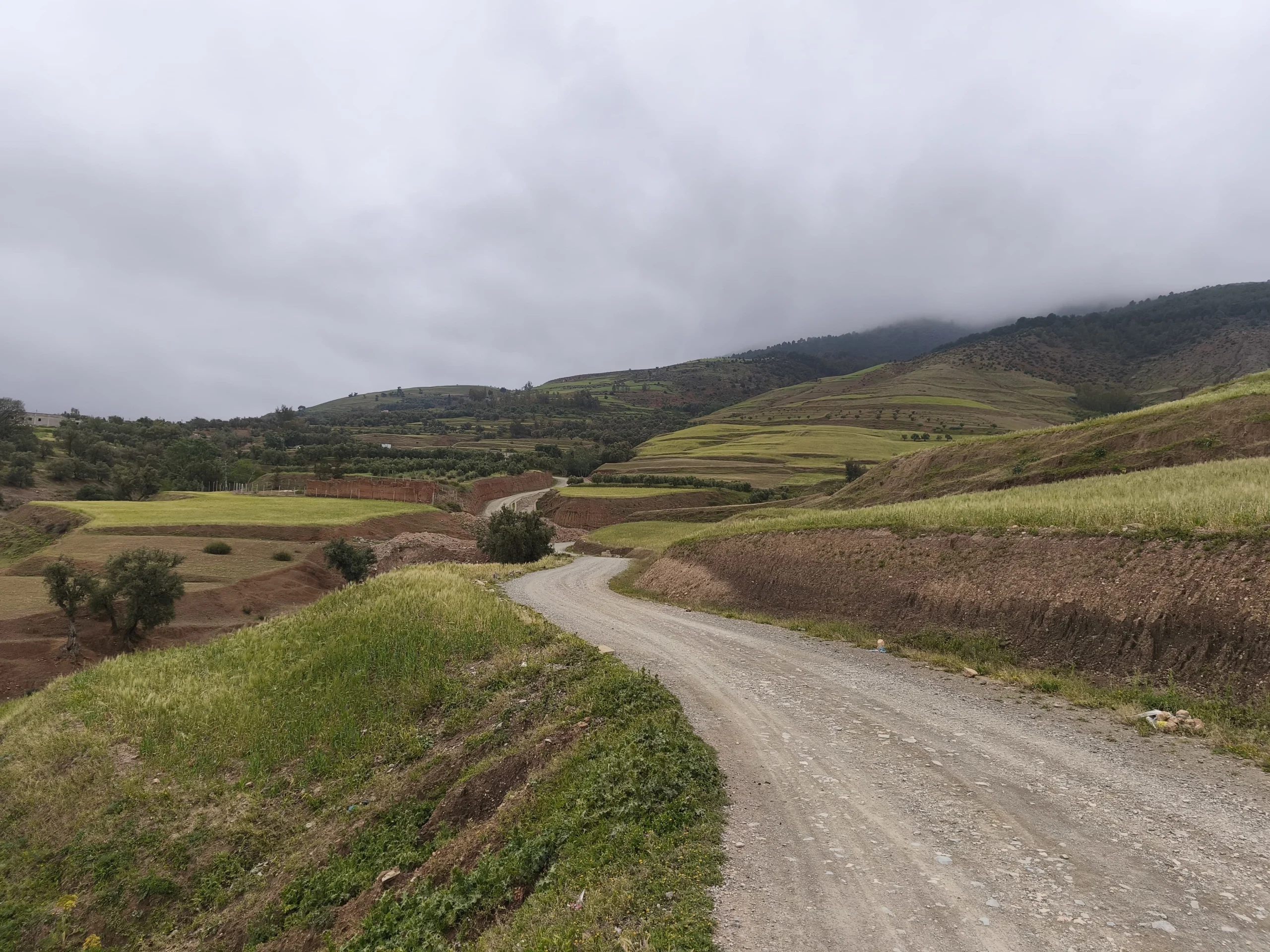
Leaving behind Marrakech's narrow medina alleys, we set out to cross the Atlas Mountains toward the Sahara Desert. The Tizi n'Tichka pass stands at 2,200 meters—one of Africa's highest drivable mountain passes—offering breathtaking views that had all the kids pressing their faces against the windows.
"We're about to cross the highest mountain pass in Africa, at around 2,000 meters," I told the children. "It will be cold up there, but the views will be amazing."
The winding mountain roads were an adventure in themselves, with each turn revealing more spectacular scenery.
The Ancient Kasbah of Ait Benhaddou
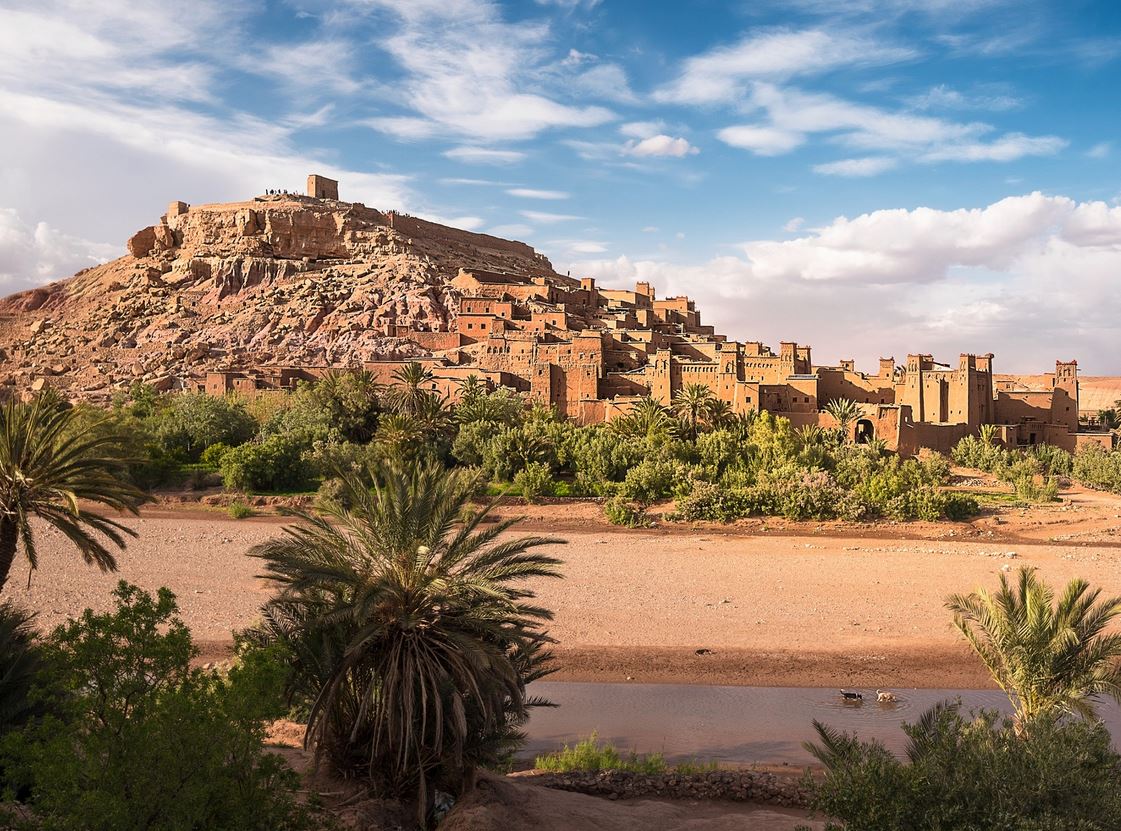
After descending the Atlas Mountains, we arrived at the UNESCO World Heritage site of Ait Benhaddou. This ancient fortified village (kasbah) is famous for appearing in many films, including Gladiator.
"We've come to see the kasbah of Ait Benhaddou, where they filmed Gladiator," I explained to the children, who suddenly became much more interested!
The strategic importance of this site came from its position along one of the main trans-Saharan caravan routes connecting Timbuktu with North Africa. Walking through the narrow paths of this ancient clay fortress felt like stepping back in time. The kids loved climbing up to the highest point for panoramic views of the surrounding landscape.
Here, we met up with friends Michel and Francesca with their children Filippo and Matteo. Our family journey now continued with twelve people—six adults and six children!
We also visited the nearby Kasbah of Al-Qorbat, another fortified citadel. "They say it was once a slave citadel," I explained to the children as we walked through. "It's been completely restored and is now a tourist attraction."
Into the Sahara Desert

OLYMPUS DIGITAL CAMERA
From Ait Benhaddou, we continued eastward toward Merzouga, where the first sand dunes of the Sahara Desert begin. After a six-hour drive in 4x4 vehicles and navigating through a minor sandstorm, we finally arrived at our desert camp.
"Here we are, at last in the Sahara Desert!" I announced to the tired but excited children. "Look at this lunar landscape and the red sand. Fascinating, isn't it?"
Behind our camp was a small nomadic settlement of tents. Our guide explained that although these were traditionally nomadic people, many now live permanently at the desert edge.
The desert around Merzouga is quite developed for tourism, with numerous camps set up for visitors. But this didn't matter to the children—after long hours confined in cars, they were thrilled to run freely across the sand dunes. The desert became their natural playground, where they could explore and slide down the dunes without any restrictions.
Camel Trek at Sunset
Though admittedly touristy, the camel ride was a huge hit with all the kids. Mounting these tall, strange creatures caused equal parts fear and excitement, but soon everyone was laughing as we formed a swaying caravan across the dunes. The sunset views from atop the camels created memories I know our children will carry forever.
If you're traveling with younger children, know that the camel ride can be a bit bumpy and uncomfortable after a while, but the experience is well worth it for the unique perspective of the desert.
Weather Challenges on the Road to Fes
From Merzouga, we headed northwest toward Fes, but encountered an unexpected adventure when heavy rain caused flash floods in the Atlas mountain streams. Our convoy of vehicles had to navigate carefully through rapidly rising waters.
"Only one will pass at a time. Head-on, head-on!" our drivers shouted as they coordinated the crossing of a particularly swollen stream.
The water nearly reached our car doors, creating a moment of genuine adventure that had the children both scared and thrilled. When we successfully made it across, everyone broke into spontaneous applause!
This unplanned challenge became one of the most memorable parts of our journey—a reminder that sometimes the best travel experiences aren't on any itinerary.
Fes: The Ancient Imperial City

Finally, we reached Fes, the oldest of Morocco's four imperial cities and for centuries one of the most influential centers in the Islamic world. The city is famous for its mosques, universities, schools, and markets.
Among the must-visit monuments, I'd recommend the Bou Inania Madrasa and the Attarine Madrasa. The most important mosque is Al-Qarawiyyin, founded in 859 and considered the oldest university in the world. Beyond being a place of worship, it quickly became a center for religious education, expanding to teach numerous subjects including natural sciences and philosophy.
The Ancient Tanneries of Fes
One of Fes's most famous attractions is its ancient tanneries, which produce high-quality leather using traditional techniques. The finished products include bags, babouches (traditional Moroccan slippers), and jackets.
I'll spare you the description of the smell! Let's just say it's powerful, but the fascinating process of watching leather being dyed in large stone pits makes it worthwhile. Most viewing terraces offer sprigs of mint to hold near your nose, which helps with the odor.
Lost in the Medina
With the help of our local guide Zahi, we began exploring the Fes medina—a true labyrinth that's impossible to navigate using Google Maps. The medina of Fes is home to thousands of artisans working in ways perhaps similar to the ancient guilds of medieval Florence.
"In the Fes medina, you'll find craftspeople working with leather, wood, ceramics, creating mosaics, metalwork, and weaving carpets and clothing—all done meticulously by hand according to traditions passed down for generations," I explained to the children.
Whenever possible, we arranged for our children to try these traditional crafts themselves. Moroccan people generally adore children, making these hands-on experiences easy to arrange and especially memorable.
"We're doing an art workshop," my daughter Vittoria explained excitedly. "I'm painting a frame they made for us right on the spot. Even the brushes were made right in front of us! We're creating real works of art."
Fes: A Creative Labyrinth
Every street in the Fes medina hides tiny workshops where artisans pass down ancient secrets through generations. Beyond the tanneries, other typical crafts of the city include:
- Glazed Ceramics: Dishes, vases, and tiles all handmade with great skill
- Weaving and Embroidery: Handcrafted textiles like embroidered caftans and traditional blankets, distinguished by the fineness of materials and complexity of designs
- Woodcarving: Artisans create beautiful decorative objects and carved, painted furniture
- Zellige: Moroccan mosaic work, where Fes is one of the main production centers. These geometric mosaics decorate fountains, walls, and courtyards with extraordinary precision
Moroccan Cuisine: A Feast for the Senses
I haven't told you yet about Moroccan cuisine, which is one of the most diverse in the Arab world, thanks to Berber, Arab, Mediterranean, French, and Spanish influences.
The distinctive feature is the use of spices: ginger, turmeric, cumin, cinnamon, and coriander. We took a cooking class to learn how to make tagine, the famous Moroccan dish slow-cooked in a conical earthenware pot.
Our favorite dish, however, was the Tangia of Marrakech—a meat stew marinated with lemon, garlic, saffron, and other spices, cooked slowly in a clay pot. It's eaten with your hands using pieces of bread to scoop up the tender meat and flavorful sauce. The children absolutely loved this interactive way of eating!
The End of Our Moroccan Family Journey
Our family journey through Morocco ended in Fes, having followed the ancient caravan routes that once carried goods across North Africa. Our goal was to understand more about Moroccan culture through its crafts and traditions, and I believe we succeeded.
This was a journey that we hope will remain in our children's memories and perhaps inspire their future passions and creativity. The combination of history, craftsmanship, desert adventure, and cultural immersion created an educational experience far more valuable than anything they could learn in school.
Tips for Your Own Morocco Family Journey
If you're planning your own family adventure from Marrakech to Fes, here are some practical tips from our experience:
- Take it slow: The distance looks manageable on a map, but mountain roads, photo stops, and exploring villages takes time.
- Pack for varied climates: You'll need light clothes for Marrakech, warm layers for the Atlas Mountains, and protection from both sun and evening chill in the desert.
- Book guides for the medinas: Especially in Fes, a local guide is essential—the maze of 9,400 narrow streets is impossible to navigate alone.
- Try hands-on workshops: Children remember what they do, not what they see. Look for pottery painting, cooking classes, or textile workshops.
- Be prepared for sensory overload: The sounds, smells, and crowds can be overwhelming. Plan quiet breaks for the children between activities.
- Arrange a desert camp in advance: The best camps book up quickly, especially during high season.
- Check the weather: Flash floods can happen in the mountains during rainy seasons, potentially affecting your route.
Have you been to Morocco with your family? Or are you planning a similar journey? I'd love to hear about your experiences in the comments below!